
Sugar-Free Electrolyte Powder: Do Electrolyte Drinks Need Sugar?
A little glucose helps absorb sodium and water; a lot is a soft drink. How to choose between sugar-free and low-sugar electrolytes.
Key takeaways
- Glucose helps sodium and water cross the gut through the SGLT1 transporter, which is why ORS contains it.
- Small amounts help; large amounts slow water absorption. WHO ORS has 6.75 g per 500 ml.
- Many sports drinks carry about 30 g of sugar per 500 ml, which is fuel, not just hydration.
- Sugar-free suits desk days and low-carb diets; a little glucose helps after heavy sweating.
"Low sugar electrolyte powder" was the fastest-rising electrolyte search in India over the past year, and "sugar free electrolyte powder" is close behind. The instinct is sound: a lot of hydration drinks are soft drinks in disguise. But zero sugar isn't automatically better. Whether you want some glucose depends on what you're using the drink for.
Why there's glucose in ORS in the first place
Your small intestine absorbs sodium through several routes. One of the fastest is a transporter called SGLT1, which carries two sodium ions in with each molecule of glucose. As sodium and glucose move into the blood, water follows by osmosis.
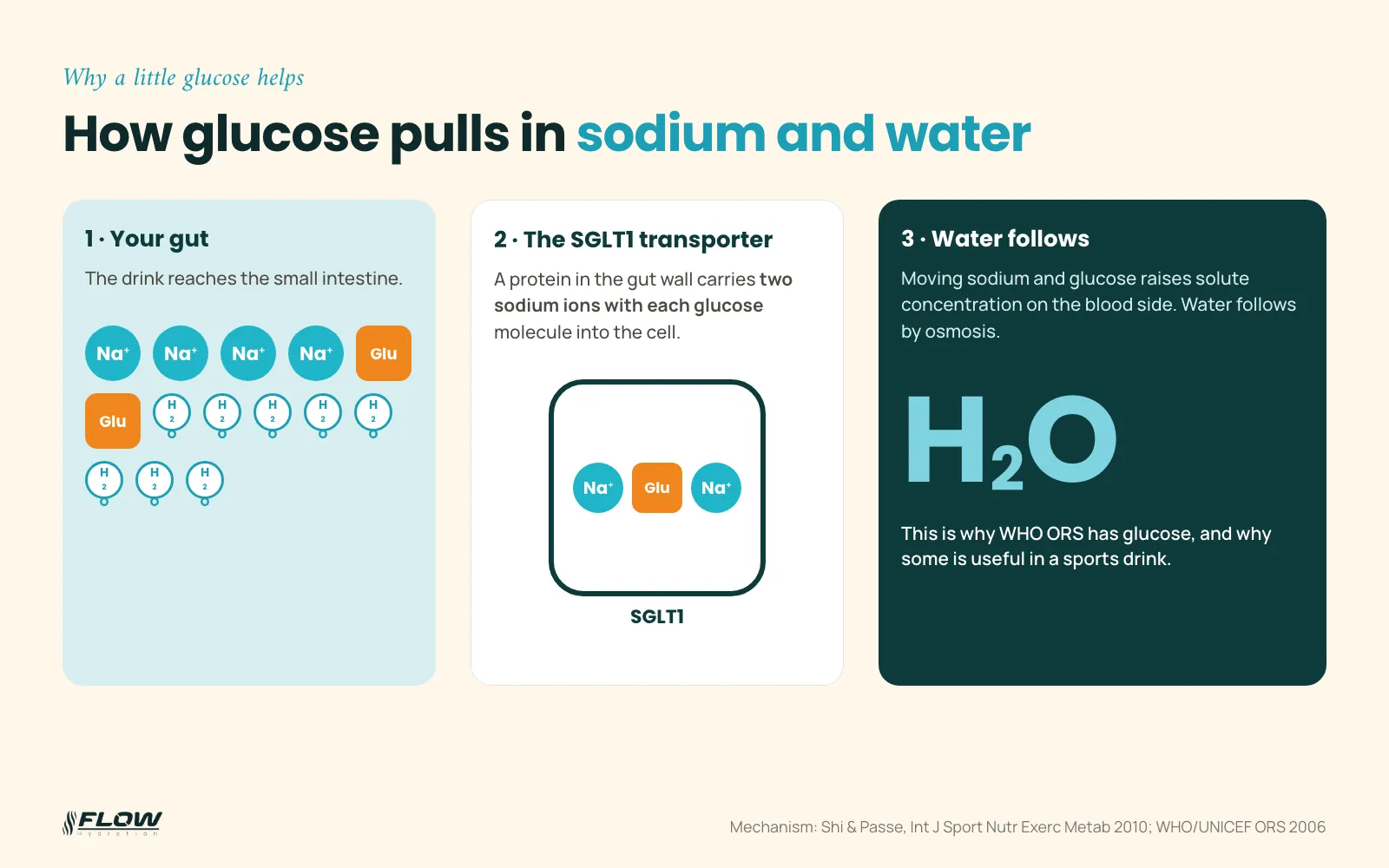
This is the principle behind oral rehydration salts. The WHO formula contains glucose and sodium in equal molar amounts, 75 mmol/L each.1 A review of every human intestinal perfusion study since the 1960s found that carbohydrate in a drink helps pull in sodium and water, but too much carbohydrate slows water absorption.2 The useful range is small amounts, not more.
How much sugar is in your hydration drink?
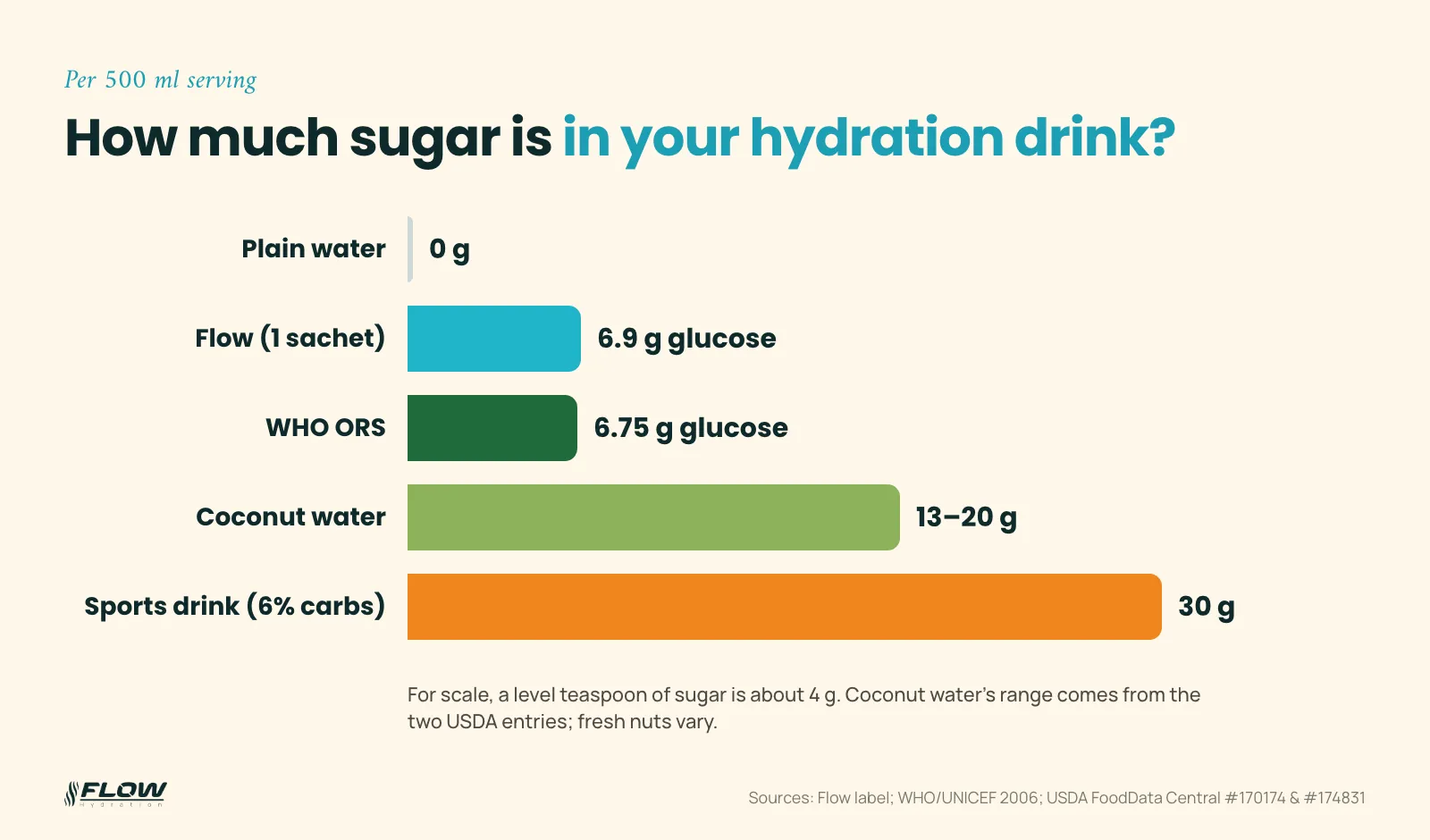
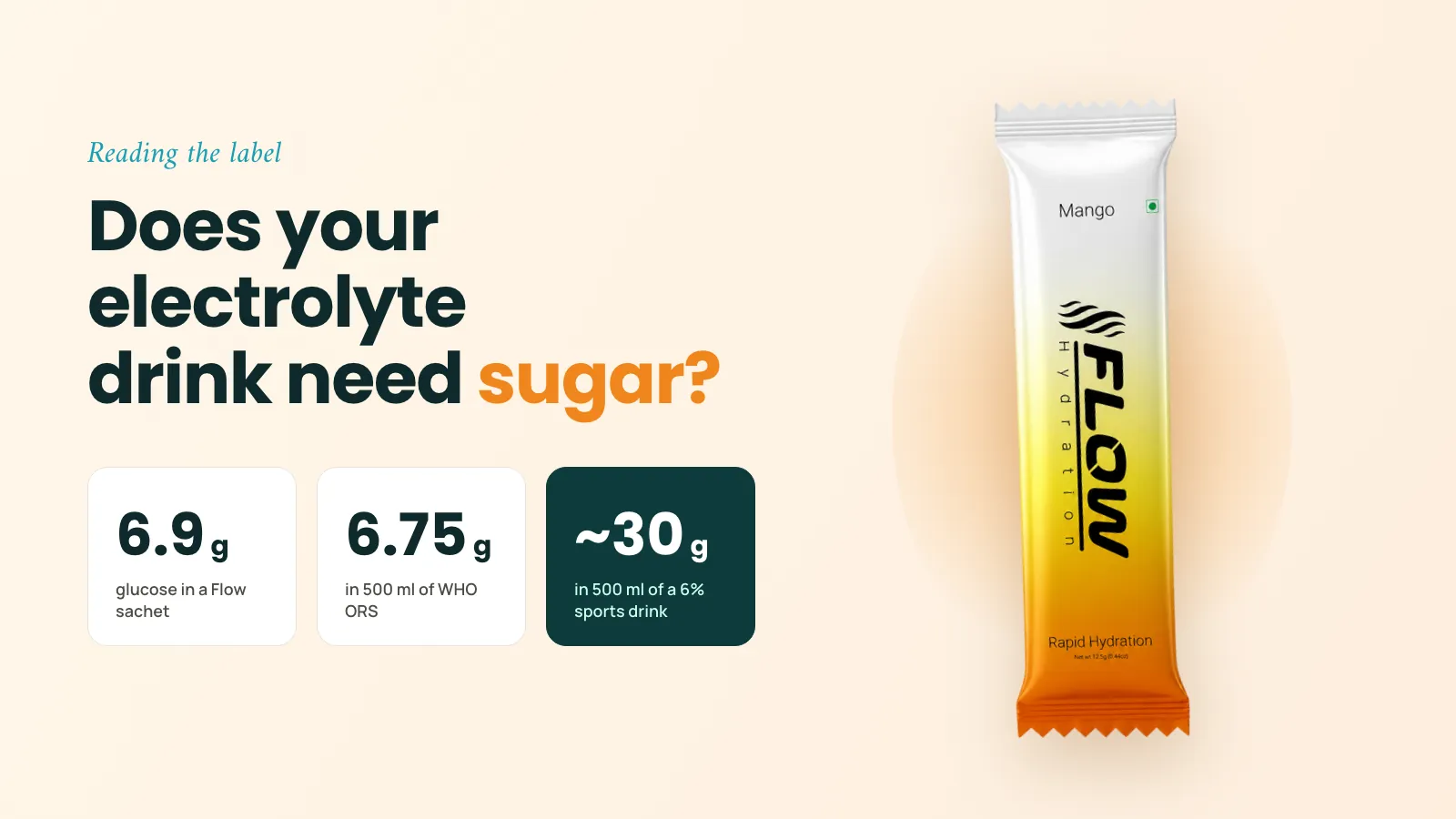
- WHO ORS: 6.75 g glucose per 500 ml1
- Flow: 6.9 g glucose per sachet, about 28 kcal
- Coconut water: about 13–20 g per 500 ml, depending on the nut5
- A typical 6% sports drink: 30 g per 500 ml. Sports drinks are designed to fuel long efforts, and ACSM recommends drinks with 5–10% carbohydrate during prolonged exercise.3
For scale, a level teaspoon of sugar is about 4 g. ICMR advises keeping added sugar under 5% of daily energy,6 so a 30 g sports drink would use up most of that budget for many adults.
When sugar-free makes sense
- Everyday or desk use, where you're not burning much energy.
- Low-carb or keto diets. Cutting carbohydrate increases sodium loss through the kidneys, so many people do feel better with salt and electrolytes and no sugar.
- Diabetes. Talk to your doctor about any electrolyte drink; for most, a few grams of glucose during exercise is manageable, but it's individual.
When a little glucose is worth it
- Rehydrating fast after heavy sweating, when absorption speed matters. Glucose-sodium co-transport is exactly what ORS relies on.1,2
- Sessions over 60–90 minutes, where carbohydrate also helps performance. For long events, ACSM and sports dietitians recommend 30–60 g of carbohydrate an hour from drinks, gels or food.4
Even then you don't need a sugary drink. A low-sugar electrolyte mix plus a banana or a gel lets you control sodium and fuel separately.
What about "zero sugar" sweeteners?
Zero-sugar mixes get their sweetness from sucralose, stevia, aspartame, acesulfame-K or sugar alcohols such as erythritol and maltitol. They're approved food additives in India. Some people find sugar alcohols upset their stomach during exercise, so test any new drink in training, not on race day.
We chose a small dose of glucose over sweeteners, so Flow isn't zero sugar, and we don't claim it is. If you want truly sugar-free hydration for a desk day, water and a salted meal will do.
How to read the label
- Find sugars per serving and the water volume it's for.
- Check whether it's glucose/dextrose (useful for absorption) or sucrose and fruit juice (mostly just calories).
- Look at sodium. A low-sugar drink with almost no sodium is just flavoured water. See our electrolyte powder guide.
Frequently asked questions
Do electrolytes have sugar?
Is sugar-free electrolyte powder better?
Can diabetics drink electrolyte drinks?
Does Flow have sugar?
References
- 1.World Health Organization & UNICEF. Oral rehydration salts: production of the new ORS. WHO/FCH/CAH/06.1. Geneva: WHO; 2006. www.who.int/publications/i/item/WHO-FCH-CAH-06.1
- 2.Shi X, Passe DH. Water and solute absorption from carbohydrate-electrolyte solutions in the human proximal small intestine: a review and statistical analysis. Int J Sport Nutr Exerc Metab. 2010;20(5):427–442. doi.org/10.1123/ijsnem.20.5.427
- 3.Sawka MN, Burke LM, Eichner ER, et al. American College of Sports Medicine position stand: Exercise and fluid replacement. Med Sci Sports Exerc. 2007;39(2):377–390. doi.org/10.1249/mss.0b013e31802ca597
- 4.Thomas DT, Erdman KA, Burke LM. Nutrition and Athletic Performance (joint position statement of ACSM, the Academy of Nutrition and Dietetics and Dietitians of Canada). Med Sci Sports Exerc. 2016;48(3):543–568. doi.org/10.1249/MSS.0000000000000852
- 5.U.S. Department of Agriculture, FoodData Central. Nuts, coconut water (liquid from coconuts), FDC ID 170174; Beverages, coconut water, ready-to-drink, unsweetened, FDC ID 174831. fdc.nal.usda.gov/
- 6.ICMR–National Institute of Nutrition. Dietary Guidelines for Indians, 2024 (Guideline 11: Restrict salt intake; Guideline 14: Drink adequate quantity of water). www.nin.res.in/dietaryguidelines/
- 7.Maughan RJ, Watson P, Cordery PA, et al. A randomized trial to assess the potential of different beverages to affect hydration status: development of a beverage hydration index. Am J Clin Nutr. 2016;103(3):717–723. doi.org/10.3945/ajcn.115.114769
Lehans · Flow Hydration team
Writes about sugar, cramps and the claims around sports drinks, and checks each against the published trials.
First published 7 May 2026. This article is general information, not medical advice. If you have a medical condition, talk to your doctor.
Keep reading

12 October 2026 · 7 min read
Coconut Water vs Electrolyte Drinks: Which Hydrates Better?
Two trials found coconut water rehydrates about as well as a sports drink after moderate exercise. Why sodium still matters for long, sweaty efforts.
Read more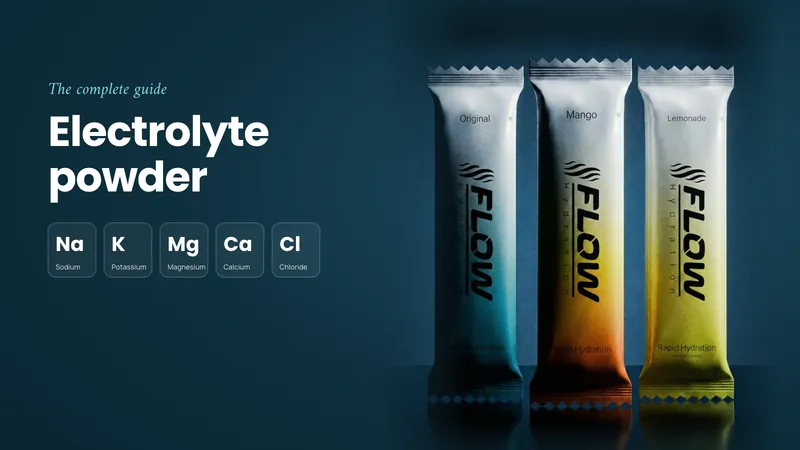
12 October 2026 · 9 min read
Electrolyte Powder: Benefits, Uses and Who Actually Needs It
What each electrolyte does, the benefits the research supports, who needs a sachet and who doesn't, and how to read a label in India.
Read more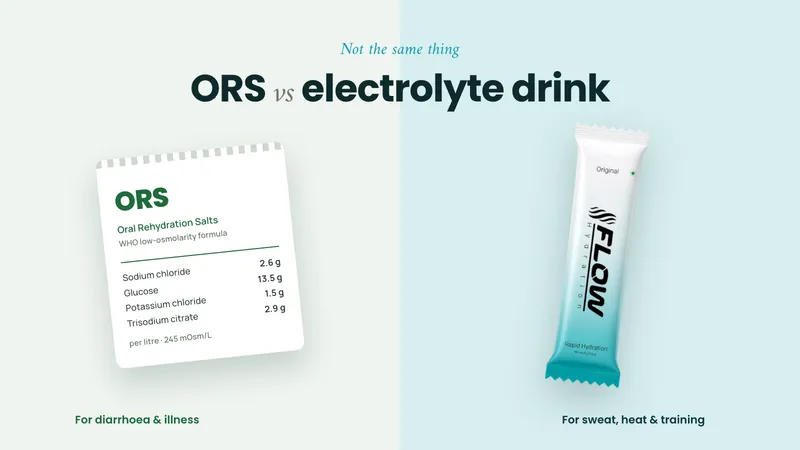
12 October 2026 · 8 min read
ORS vs Electrolyte Drinks: What's the Difference (and What FSSAI Changed)
ORS isn't banned, but sugary drinks can no longer use its name. The WHO formula, what FSSAI changed, and when to choose ORS over an electrolyte drink.
Read more