
Electrolytes for the Gym: When to Drink Them Before, During and After a Workout
Most short gym sessions only need water. The before, during and after timeline from the ACSM position stand, and when electrolytes earn their place.
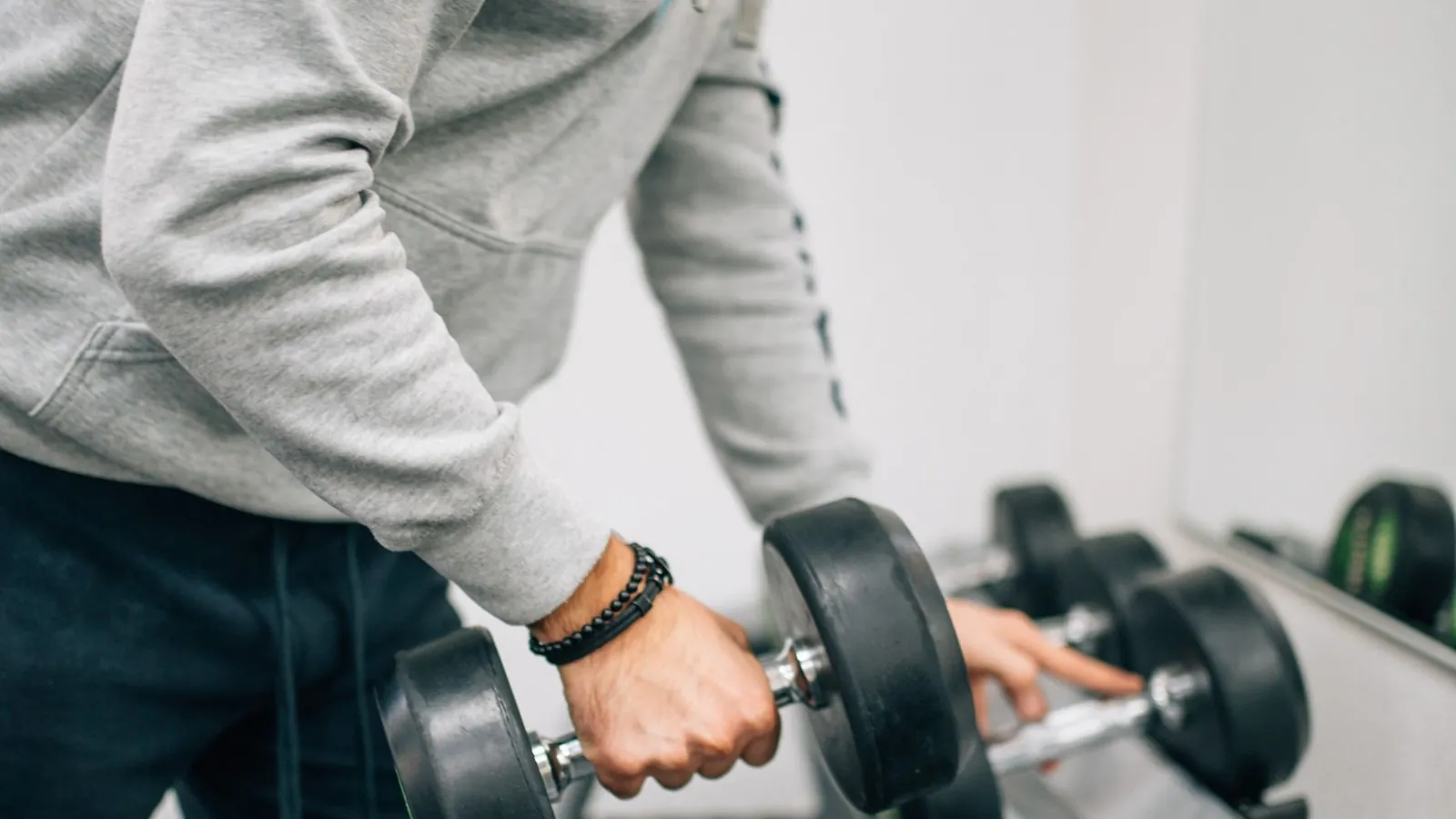
Key takeaways
- Under 60 minutes in a cool gym, water to thirst is usually enough.
- Before: 5–7 ml/kg about four hours before training.
- During long or hot sessions: about 400–800 ml an hour with sodium, staying within 2% body-weight loss.
- After: drink 1.25–1.5 L per kg lost, with sodium, so you retain it.
- Electrolytes don't replace pre-workout, creatine or protein. They do a different job.
"Electrolytes for gym" and "when to drink electrolytes, before or after workout" are two of the most common electrolyte searches in India. The short answer: it depends on how long you train, how hot it is and how much you sweat. Here's the timeline the sports-science position stands recommend, and when an electrolyte drink is worth it.
Do you need electrolytes for the gym?
For a typical 45–60 minute strength session in an air-conditioned gym, usually not. Water to thirst and your next meal replace what you lose. Electrolytes become useful when:
- The session runs past about 60 minutes, or you train twice a day
- You're doing HIIT, CrossFit-style circuits or sports in a hot gym, a turf or outdoors
- You sweat heavily or see salt marks on your T-shirt
- You're cutting weight or on a low-carb diet
Sweat rates in athletes average about 1.2 litres an hour but vary from about 0.3 to over 5,7 which is why both ACSM and the National Athletic Trainers' Association say to personalise your plan.1,2
When to drink: before, during and after
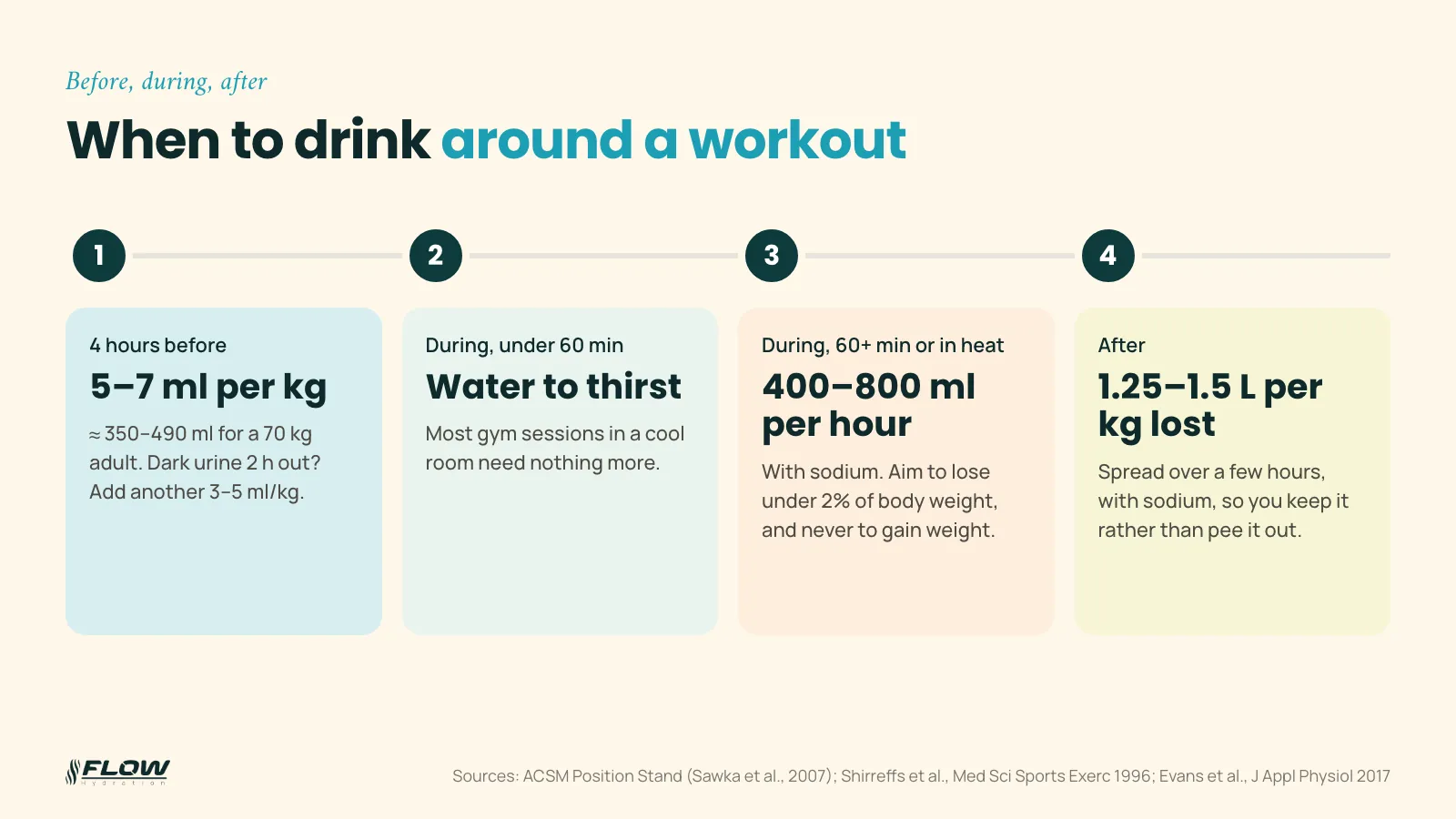
Before (pre-workout hydration)
About four hours before training, drink roughly 5–7 ml per kg of body weight: 350–490 ml for a 70 kg person. If you're not peeing, or your urine is dark, add another 3–5 ml/kg about two hours out. Having some sodium (a salty snack or an electrolyte drink) helps you hold on to it.1
During (intra-workout)
The aim is to avoid losing more than about 2% of body weight, without overdrinking.1 ACSM suggests 400–800 ml an hour as a starting range, adjusted for your sweat rate and the heat. Exercise physiologist Dr Andy Galpin's rule of thumb on the Huberman Lab podcast lands in the same place: body weight in pounds ÷ 30 = ounces every 15–20 minutes.5
Don't stress over the exact number in short sessions. A meta-analysis of cycling time trials found that drinking to thirst performed as well as or better than following a fixed schedule.6
After (post-workout recovery)
To fully rehydrate, you need to drink more than you lost, and it needs sodium. In a classic study, drinks equal to 150% of sweat loss restored fluid balance far better when they contained more sodium. With low-sodium drinks, most of the extra volume just became urine.3,4 A practical target is 1.25–1.5 litres for every kg lost, spread over a few hours.
A meal with salt does much of this job, as does milk. An electrolyte drink is handy when you need to train again the same day.
Electrolytes vs pre-workout, creatine and BCAAs
- Electrolytes vs pre-workout: pre-workouts are mostly caffeine for alertness. Electrolytes replace sweat. They do different jobs, and many pre-workouts contain little or no sodium.
- Electrolytes vs creatine: creatine is for strength and power over weeks; it doesn't hydrate you. You can take both.
- Electrolytes vs BCAAs: BCAAs are amino acids. If you already eat enough protein they add little, and they don't replace sodium.
Cricket, football and other team sports
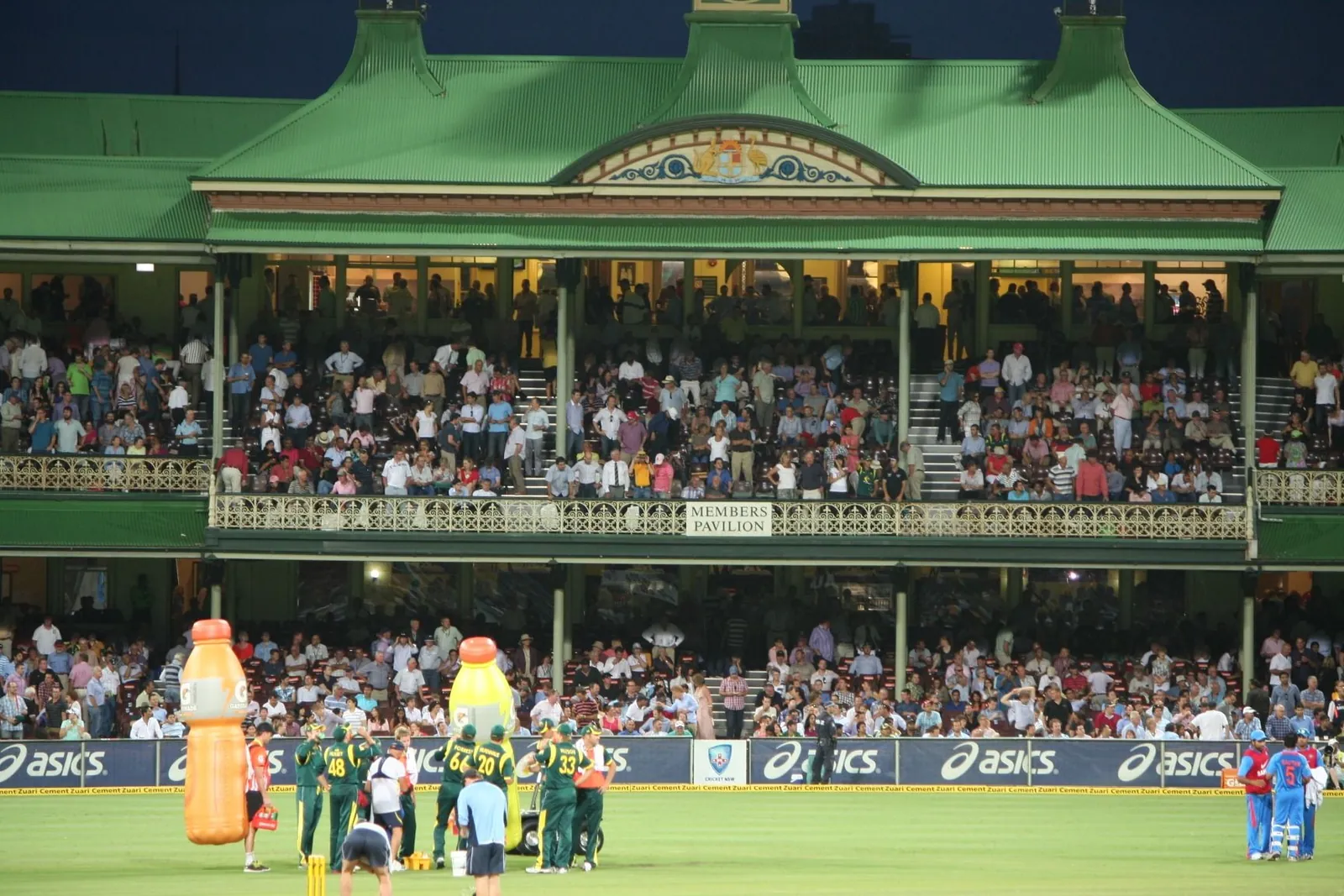
Team sports in Indian heat combine long durations with bursts of high intensity, so sweat losses add up. That's the case for electrolytes. Use drinks breaks and innings breaks to sip, aim to stay within about 2% of starting body weight,1 and plan carbohydrate too: for 1–2.5 hours of play, sports dietitians suggest 30–60 g an hour.8

How we'd use Flow around training
- Short session, cool gym: water. Save the sachet.
- Long or hot session: one sachet in 500 ml, sipped from halfway through.
- Two sessions in a day, or a heavy sweat: one sachet with water afterwards, plus a proper meal.
For long runs and races, see our marathon hydration plan. If you're cramping, see what really causes cramps.
Frequently asked questions
Should I drink electrolytes before or after a workout?
Are electrolytes good for the gym?
Can I take electrolytes with creatine?
How much water should I drink during a workout?
References
- 1.Sawka MN, Burke LM, Eichner ER, et al. American College of Sports Medicine position stand: Exercise and fluid replacement. Med Sci Sports Exerc. 2007;39(2):377–390. doi.org/10.1249/mss.0b013e31802ca597
- 2.McDermott BP, Anderson SA, Armstrong LE, et al. National Athletic Trainers' Association position statement: Fluid replacement for the physically active. J Athl Train. 2017;52(9):877–895. doi.org/10.4085/1062-6050-52.9.02
- 3.Shirreffs SM, Taylor AJ, Leiper JB, Maughan RJ. Post-exercise rehydration in man: effects of volume consumed and drink sodium content. Med Sci Sports Exerc. 1996;28(10):1260–1271. doi.org/10.1097/00005768-199610000-00009
- 4.Evans GH, James LJ, Shirreffs SM, Maughan RJ. Optimizing the restoration and maintenance of fluid balance after exercise-induced dehydration. J Appl Physiol. 2017;122(4):945–951. doi.org/10.1152/japplphysiol.00745.2016
- 5.Huberman Lab podcast. Dr. Andy Galpin: Optimal Nutrition & Supplementation for Fitness (Guest Series, episode 6). 22 February 2023. www.hubermanlab.com/episode/dr-andy-galpin-optimal-nutrition-and-supplementation-for-fitness
- 6.Goulet EDB. Effect of exercise-induced dehydration on time-trial exercise performance: a meta-analysis. Br J Sports Med. 2011;45(14):1149–1156. doi.org/10.1136/bjsm.2010.077966
- 7.Baker LB, Barnes KA, Anderson ML, Passe DH, Stofan JR. Normative data for regional sweat sodium concentration and whole-body sweating rate in athletes. J Sports Sci. 2016;34(4):358–368. doi.org/10.1080/02640414.2015.1055291
- 8.Thomas DT, Erdman KA, Burke LM. Nutrition and Athletic Performance (joint position statement of ACSM, the Academy of Nutrition and Dietetics and Dietitians of Canada). Med Sci Sports Exerc. 2016;48(3):543–568. doi.org/10.1249/MSS.0000000000000852
Susheel · Flow Hydration team
Covers running, races and training hydration, drawing on the ACSM position stands and the field research behind them.
First published 12 October 2026. This article is general information, not medical advice. If you have a medical condition, talk to your doctor.
Keep reading
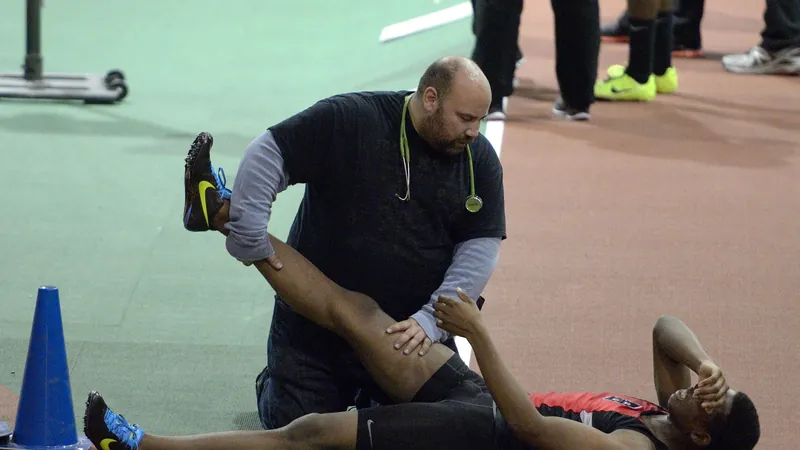
12 October 2026 · 8 min read
Muscle Cramps: What Really Causes Them, and Do Electrolytes or Magnesium Help?
Research points to fatigue more than dehydration. When electrolytes help, why magnesium probably won't, and what to do mid-cramp.
Read more
12 October 2026 · 9 min read
Electrolyte Powder: Benefits, Uses and Who Actually Needs It
What each electrolyte does, the benefits the research supports, who needs a sachet and who doesn't, and how to read a label in India.
Read more
12 October 2026 · 8 min read
ORS vs Electrolyte Drinks: What's the Difference (and What FSSAI Changed)
ORS isn't banned, but sugary drinks can no longer use its name. The WHO formula, what FSSAI changed, and when to choose ORS over an electrolyte drink.
Read more