
Heat Stroke: Symptoms, First Aid and Prevention in Indian Summers
Confusion in the heat is an emergency. The symptoms, NCDC's first-aid steps, why you cool before you transport, and who's most at risk.
Key takeaways
- Heat stroke means a core temperature of about 40°C or more with confusion, collapse or seizures. It's an emergency.
- Heat exhaustion comes first: heavy sweating, dizziness, nausea, but a clear mind.
- Cool first, transport second: start cooling on the spot and call 102 or 108.
- Cold-water immersion is the fastest cooling method; otherwise soak, cover with wet sheets and fan.
- People with exertional heat stroke may still be sweating. Don't wait for dry skin.
Heat stroke searches in India climb every year from March and peak in April and May, along with the heatwaves. It's the most serious heat illness, and it's very survivable if the people around the patient know one rule: cool first, transport second. This guide explains the symptoms, how heat stroke differs from heat exhaustion, the first-aid steps India's National Centre for Disease Control recommends, and how to prevent it.
What is heat stroke?
Heat stroke happens when the body's core temperature rises to about 40°C or higher and the brain starts to fail: confusion, collapse, seizures. At those temperatures, heat directly damages cells in the brain, liver, kidneys and blood vessels.1,2
There are two kinds:
- Classic (non-exertional) heat stroke builds over days of heatwave, mostly in older adults, young children and people with chronic illness, often indoors without cooling.
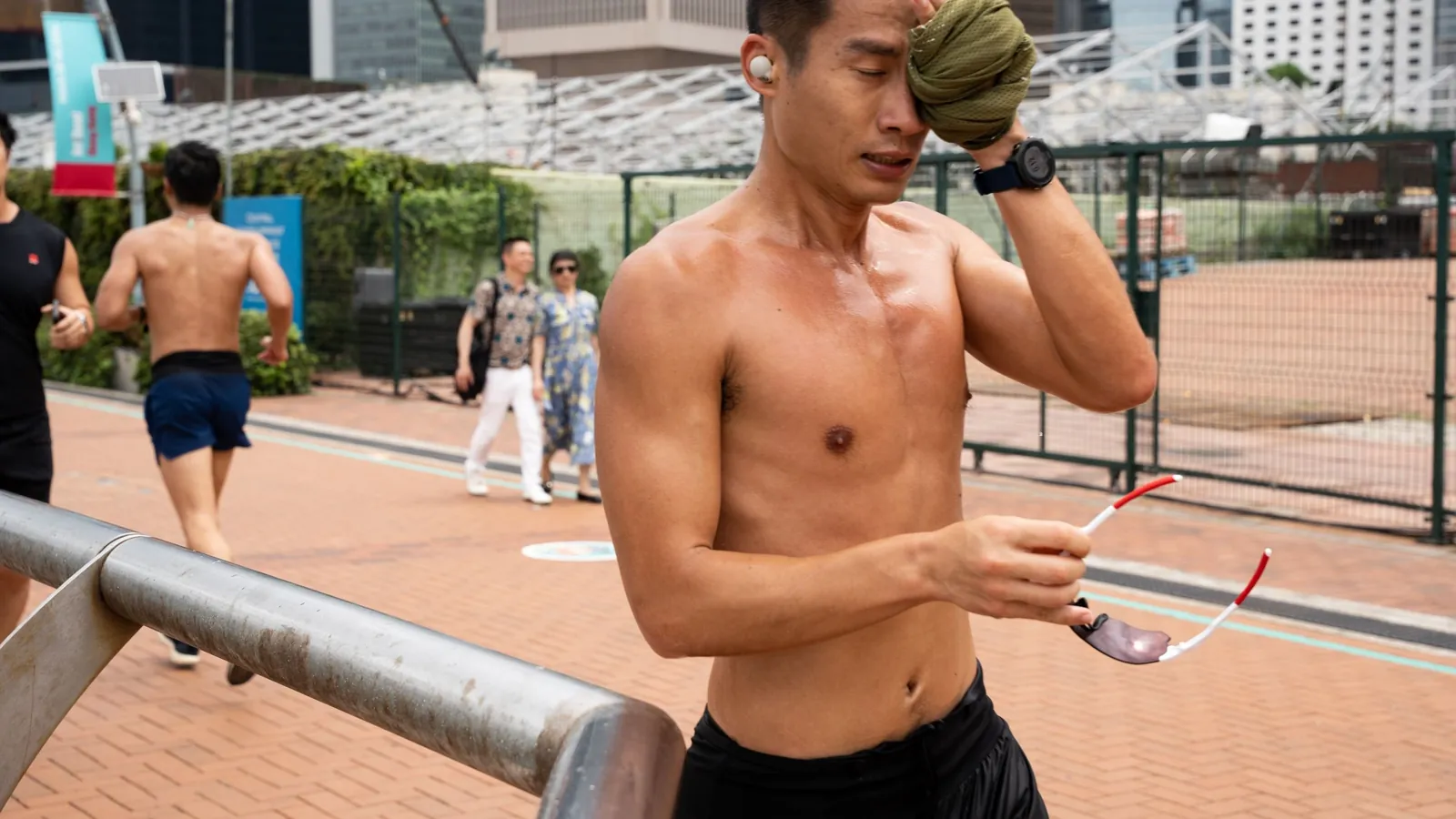
- Exertional heat stroke strikes fit, young people working or exercising hard in the heat: runners, labourers, soldiers, players. It can develop within an hour.2,3
Heat stroke symptoms vs heat exhaustion
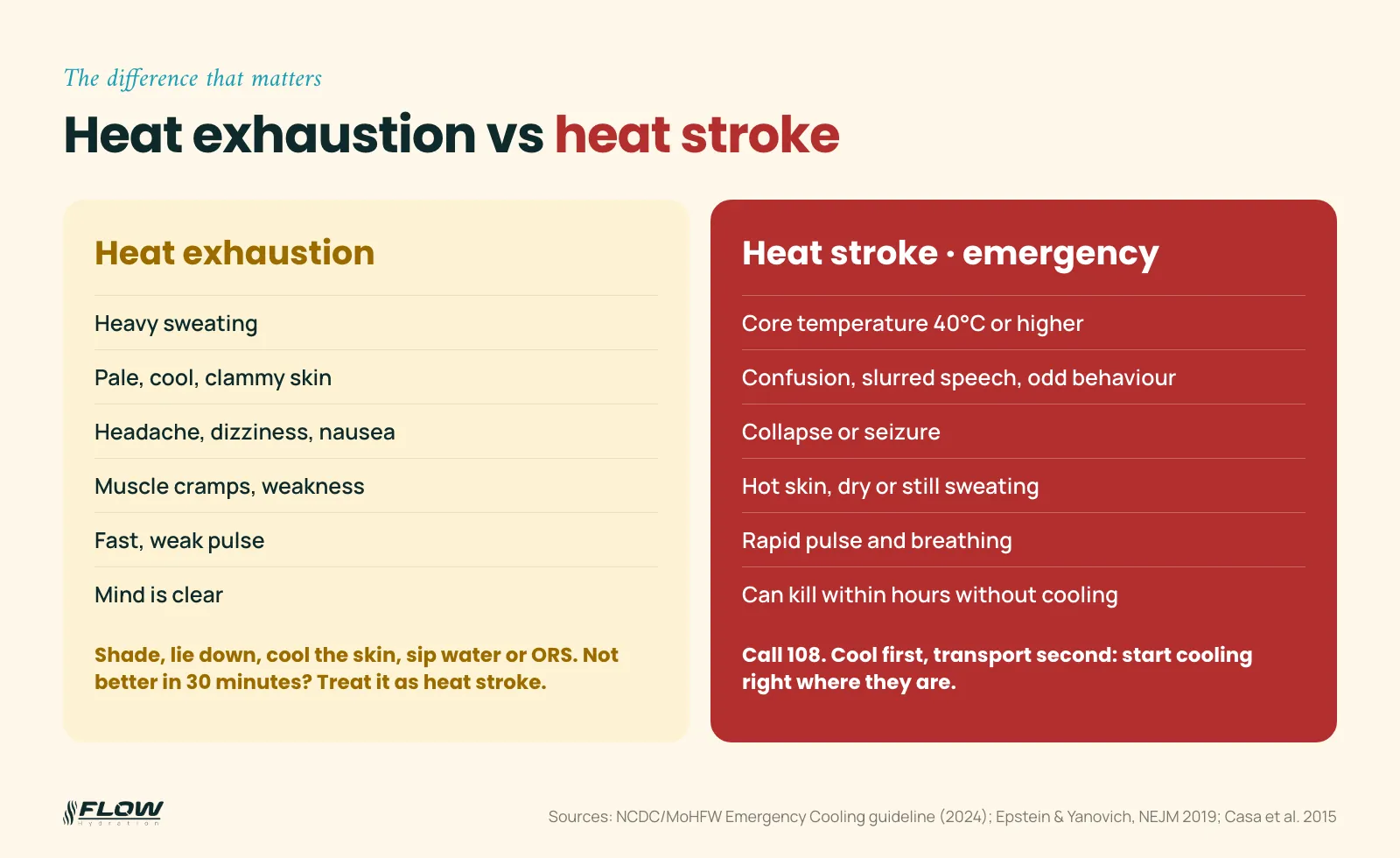
Heat exhaustion is the warning stage: heavy sweating, pale cool or clammy skin, headache, dizziness, nausea, cramps, weakness and a fast pulse. The person is still thinking clearly. Rest, shade, cooling and fluids usually bring recovery within 30 minutes.
Heat stroke is different because of what happens to the brain. Watch for confusion, slurred speech, strange behaviour, aggression, collapse or seizures, with a very high body temperature. The skin is hot. It may be dry, but in exertional heat stroke people are often still sweating, so don't wait for dry skin before acting.2,3
Heat stroke first aid: cool first, transport second
The risk of death and lasting organ damage depends on how long the body stays above about 40°C. So cooling must start where the person collapsed, before and during the trip to hospital. India's 2024 national guideline on emergency cooling states this outright, and recommends community first aid in this order:1
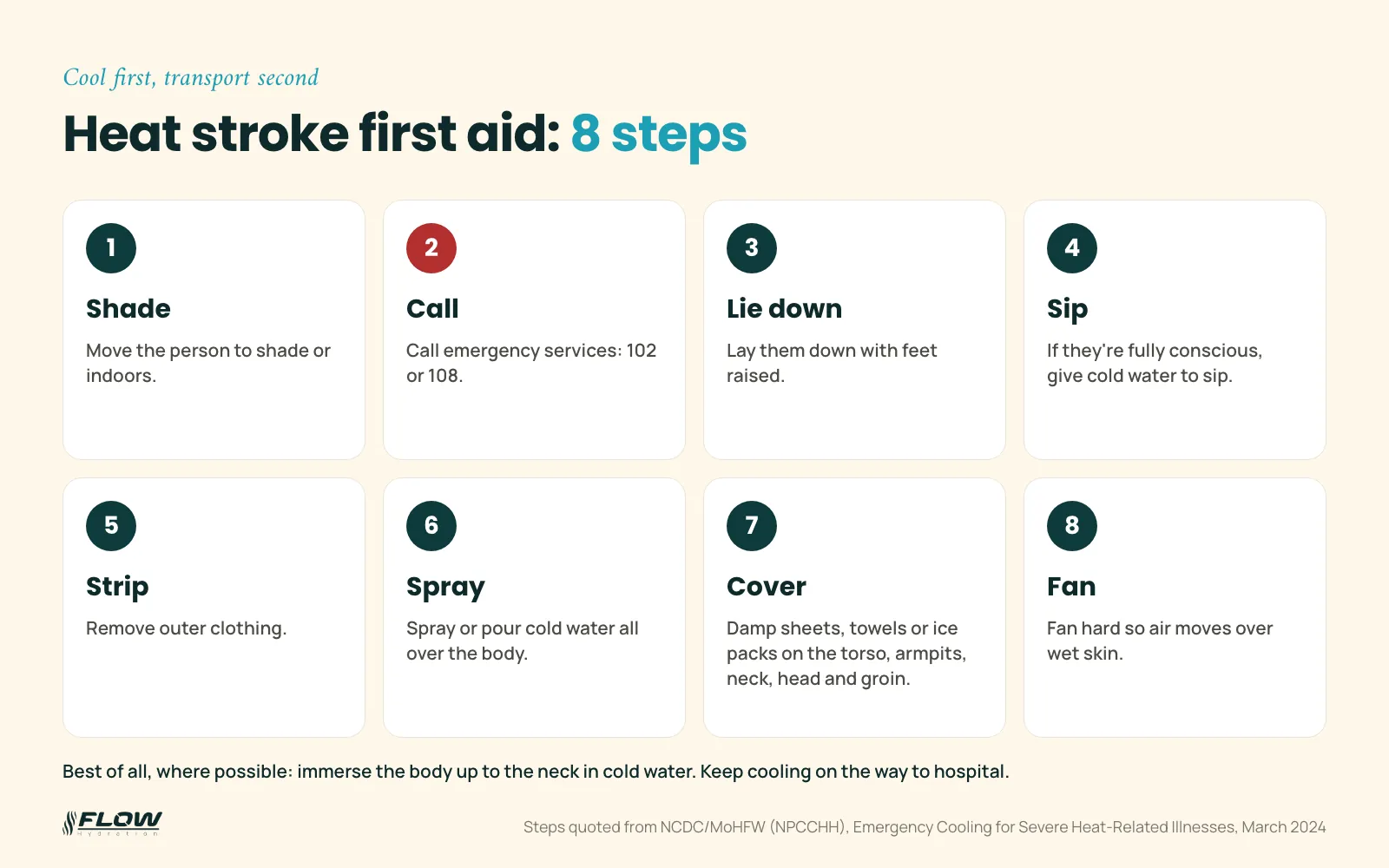
- Move the person to shade or indoors.
- Call emergency services: 102 or 108.
- Lay them down with their feet raised.
- If they're conscious, give cold water to sip.
- Remove outer clothing.
- Spray or pour cold water over the body.
- Put damp sheets, towels or ice packs on the torso, armpits, neck, head and groin.
- Fan them so air moves over the wet skin.1
The most effective field method, where it's possible (at races, sports grounds or worksites with a tub or tarp), is immersing the body up to the neck in cold or iced water. NCDC and the US National Athletic Trainers' Association both rank it first for exertional heat stroke.1,3 Ice packs only at the neck, armpits and groin cool much more slowly than full-body methods,1 so use them with soaking and fanning, not instead of them.
Don't give fluids by mouth to someone who is confused or unconscious, and don't give fever medicines like paracetamol. They don't lower heat-stroke temperatures.2
Who is most at risk
- Adults over 65, infants and young children
- People with heart, lung or kidney disease, diabetes or obesity, and those on diuretics or some psychiatric medicines
- Outdoor workers: construction, traffic police, delivery riders, farm workers
- Athletes and runners pushing hard in heat they aren't used to
The Lancet's review of heat and health notes that heat stress is especially dangerous in tropical regions and for people doing physical work, and that most heat deaths are preventable with heat action plans.4
How to prevent heat stroke
- Time it. Train or work outdoors before 10 am or after 5 pm in summer. Follow IMD heat alerts.
- Acclimatise. It takes about 10–14 days of gradual heat exposure for the body to sweat earlier and lose less salt. Ease in.3
- Drink to replace sweat, with sodium on long or very sweaty days. Fluid loss above about 2% of body weight raises heat strain.5 See our dehydration guide.
- Don't overdrink plain water either. During long events that causes hyponatremia, which can look like heat illness.6
- Dress light, seek shade, take breaks, and watch the people around you. Heat stroke victims often don't realise they're in trouble.
Flow is the hydration partner for several Bengaluru events, and the plan we give race crews is the same: cooling stations and ice tubs first, fluids second. An electrolyte drink helps prevent heat illness. It doesn't treat heat stroke.
Frequently asked questions
What are the first symptoms of heat stroke?
What is the first aid for heat stroke?
What is the difference between heat stroke and heat exhaustion?
Can ORS or an electrolyte drink treat heat stroke?
References
- 1.National Centre for Disease Control, MoHFW (NPCCHH). Emergency Cooling for Severe Heat-Related Illnesses. March 2024. heathealth.info/wp-content/uploads/Emergency-Cooling-for-Severe-Heat-Related-Illnesses_March2024_NPCCHH.pdf
- 2.Epstein Y, Yanovich R. Heatstroke. N Engl J Med. 2019;380(25):2449–2459. doi.org/10.1056/NEJMra1810762
- 3.Casa DJ, DeMartini JK, Bergeron MF, et al. National Athletic Trainers' Association position statement: Exertional heat illnesses. J Athl Train. 2015;50(9):986–1000. doi.org/10.4085/1062-6050-50.9.07
- 4.Ebi KL, Capon A, Berry P, et al. Hot weather and heat extremes: health risks. Lancet. 2021;398(10301):698–708. doi.org/10.1016/S0140-6736(21)01208-3
- 5.Sawka MN, Burke LM, Eichner ER, et al. American College of Sports Medicine position stand: Exercise and fluid replacement. Med Sci Sports Exerc. 2007;39(2):377–390. doi.org/10.1249/mss.0b013e31802ca597
- 6.Hew-Butler T, Rosner MH, Fowkes-Godek S, et al. Statement of the Third International Exercise-Associated Hyponatremia Consensus Development Conference, Carlsbad, California, 2015. Clin J Sport Med. 2015;25(4):303–320. doi.org/10.1097/JSM.0000000000000221
Ananya · Flow Hydration team
Writes about heat, dehydration and staying safe through the Indian summer, using NCDC and WHO guidance.
First published 12 October 2026. This article is general information, not medical advice. If you have a medical condition, talk to your doctor.
Keep reading

12 October 2026 · 8 min read
Dehydration Symptoms in Adults: Signs, Urine Colour Chart and What to Drink
How dehydration feels at 1–2% and when it becomes an emergency, plus a urine colour chart and what to drink at each stage.
Read more
12 October 2026 · 9 min read
Electrolyte Powder: Benefits, Uses and Who Actually Needs It
What each electrolyte does, the benefits the research supports, who needs a sachet and who doesn't, and how to read a label in India.
Read more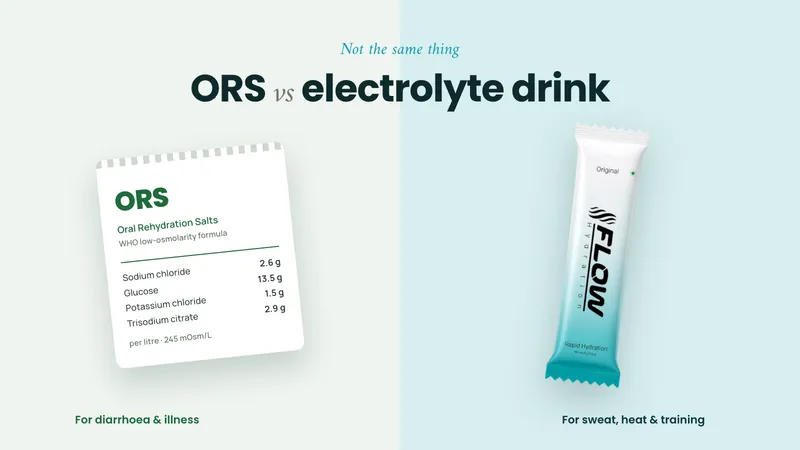
12 October 2026 · 8 min read
ORS vs Electrolyte Drinks: What's the Difference (and What FSSAI Changed)
ORS isn't banned, but sugary drinks can no longer use its name. The WHO formula, what FSSAI changed, and when to choose ORS over an electrolyte drink.
Read more