
Dehydration Symptoms in Adults: Signs, Urine Colour Chart and What to Drink
How dehydration feels at 1–2% and when it becomes an emergency, plus a urine colour chart and what to drink at each stage.

Key takeaways
- Losing just 1–2% of body weight in fluid can bring headache, low mood and poorer concentration.
- Urine colour is a useful field check: aim for pale straw (shades 1–3).
- B-vitamins can turn urine bright yellow without you being dehydrated.
- After heavy sweating, drinks with sodium rehydrate better than plain water; for diarrhoea use WHO ORS.
- Confusion, fainting or no urine for 8+ hours is an emergency. Call 108 or 112.
"Dehydration symptoms" is one of the most searched health phrases in India every summer, and for good reason. Mild dehydration is easy to miss, and it affects how you feel and think well before you feel thirsty enough to notice. Here's how to recognise it at each stage, how to check yourself in ten seconds, and what to drink.
What dehydration actually is
Dehydration means your body has lost more water than it has taken in. Physiologists measure it as a percentage of body weight: a 70 kg adult who loses 1.4 kg of fluid is 2% dehydrated.1 In India the usual causes are sweat (heat, exercise, outdoor work), not drinking enough on busy days, and illness: diarrhoea, vomiting and fever.
Dehydration symptoms in adults, by severity
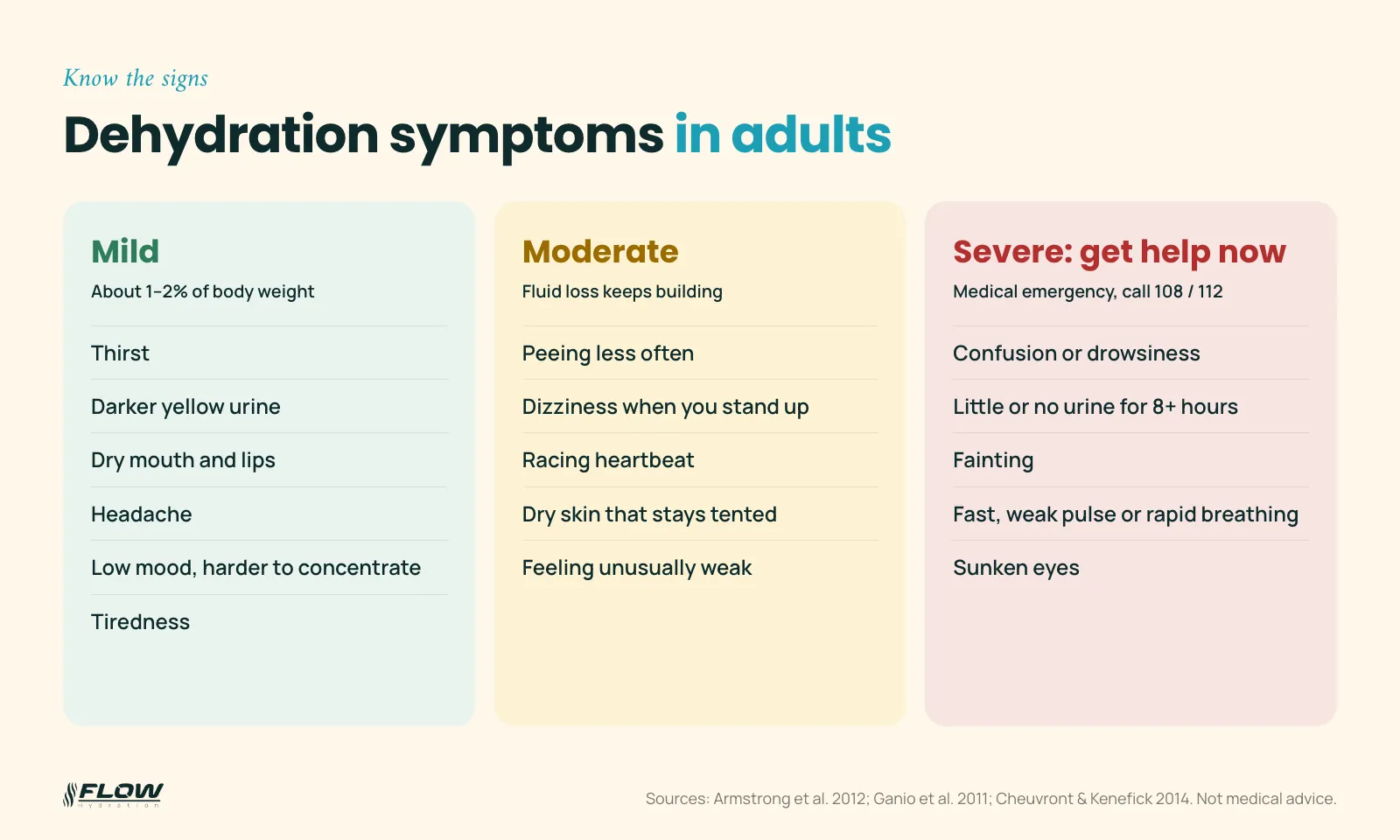
Mild (about 1–2% of body weight)
- Thirst and a dry mouth
- Darker yellow urine
- Headache
- Tiredness, low mood, finding it harder to concentrate
The mood effects are well documented. In controlled trials, young women at about 1.4% dehydration reported worse mood, more headaches and lower concentration,2 and young men at about 1.6% made more errors on vigilance tasks and felt more tense and fatigued.3 That's roughly the deficit you can build up on a hot commute and a busy morning.
Moderate
- Peeing less often
- Dizziness or light-headedness when you stand up
- A racing heartbeat
- Feeling unusually weak
Severe: a medical emergency
- Confusion, drowsiness or irritability
- Little or no urine for eight hours or more
- Fainting, a fast weak pulse or rapid breathing
- Sunken eyes
Severe dehydration needs medical care, often intravenous fluids. Call 108 or 112, or get to a hospital. Children and older adults dehydrate faster and show it less clearly.
The urine colour check
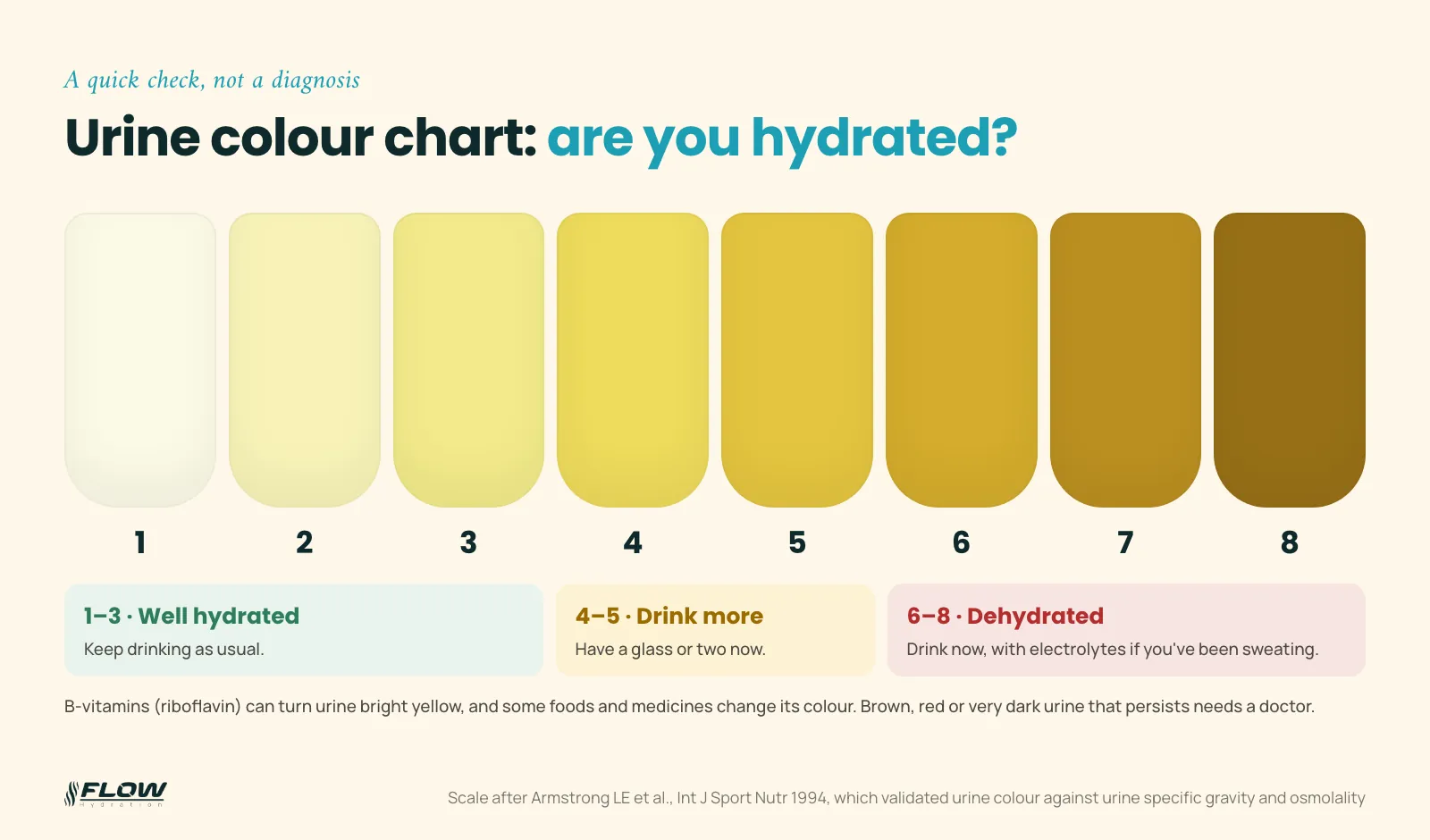
The simplest home test is the colour of your urine. Researchers validated an eight-shade scale against lab measures (urine specific gravity and osmolality) and found it accurate enough for field use, though not for the lab.4 Pale straw is good. Dark yellow or amber means drink. Brown or red needs a doctor, not a glass of water.
One catch: B-vitamins, especially riboflavin (B2), turn urine bright yellow for a few hours. If you take a multivitamin or an electrolyte drink with B-vitamins, that colour doesn't mean you're dehydrated.
Common causes in India
- Heat and humidity. Humid air slows sweat evaporation, so you sweat more for the same cooling.
- Exercise, especially outdoors and in summer.
- Air-conditioned offices. AC itself doesn't dehydrate you much, but dry air and long meetings mean people simply drink less.
- Diarrhoea, vomiting and fever, which lose water and sodium fast.
- Alcohol, which increases urine output.

What to drink when you're dehydrated
Mild, from everyday life: water is fine. Drink steadily rather than gulping a litre at once. Tea, coffee, milk, buttermilk and fruit all count.5
After heavy sweating: add sodium. Drinks with electrolytes are retained better than water. In one trial, ORS and milk both kept significantly more fluid in the body over four hours than still water.6 An electrolyte drink like Flow or a salty snack with water works.
From diarrhoea or vomiting: use WHO-formula ORS, in small frequent sips.7 See ORS vs electrolyte drinks.
Don't overcorrect. Forcing down litres of plain water can dilute blood sodium, a condition called hyponatremia, especially during long events.8
How to prevent it
- Keep water in sight: on your desk, in the car, in your bag.
- Drink with every meal. ICMR's guideline is about 2 litres of fluid a day for a healthy adult, more in heat or with exercise.9 More on that in how much water you need a day.
- Check urine colour mid-morning and mid-afternoon.
- On hot days, plan sodium as well as water. See our heat stroke guide.
Frequently asked questions
What are the first signs of dehydration?
How can I check if I'm dehydrated at home?
What is the fastest way to rehydrate?
Can dehydration cause headaches?
When is dehydration an emergency?
References
- 1.Cheuvront SN, Kenefick RW. Dehydration: physiology, assessment, and performance effects. Compr Physiol. 2014;4(1):257–285. doi.org/10.1002/cphy.c130017
- 2.Armstrong LE, Ganio MS, Casa DJ, et al. Mild dehydration affects mood in healthy young women. J Nutr. 2012;142(2):382–388. doi.org/10.3945/jn.111.142000
- 3.Ganio MS, Armstrong LE, Casa DJ, et al. Mild dehydration impairs cognitive performance and mood of men. Br J Nutr. 2011;106(10):1535–1543. doi.org/10.1017/S0007114511002005
- 4.Armstrong LE, Maresh CM, Castellani JW, et al. Urinary indices of hydration status. Int J Sport Nutr. 1994;4(3):265–279. doi.org/10.1123/ijsn.4.3.265
- 5.Popkin BM, D'Anci KE, Rosenberg IH. Water, hydration, and health. Nutr Rev. 2010;68(8):439–458. doi.org/10.1111/j.1753-4887.2010.00304.x
- 6.Maughan RJ, Watson P, Cordery PA, et al. A randomized trial to assess the potential of different beverages to affect hydration status: development of a beverage hydration index. Am J Clin Nutr. 2016;103(3):717–723. doi.org/10.3945/ajcn.115.114769
- 7.World Health Organization & UNICEF. Oral rehydration salts: production of the new ORS. WHO/FCH/CAH/06.1. Geneva: WHO; 2006. www.who.int/publications/i/item/WHO-FCH-CAH-06.1
- 8.Hew-Butler T, Rosner MH, Fowkes-Godek S, et al. Statement of the Third International Exercise-Associated Hyponatremia Consensus Development Conference, Carlsbad, California, 2015. Clin J Sport Med. 2015;25(4):303–320. doi.org/10.1097/JSM.0000000000000221
- 9.ICMR–National Institute of Nutrition. Dietary Guidelines for Indians, 2024 (Guideline 11: Restrict salt intake; Guideline 14: Drink adequate quantity of water). www.nin.res.in/dietaryguidelines/
Ananya · Flow Hydration team
Writes about heat, dehydration and staying safe through the Indian summer, using NCDC and WHO guidance.
First published 12 October 2026. This article is general information, not medical advice. If you have a medical condition, talk to your doctor.
Keep reading
12 October 2026 · 8 min read
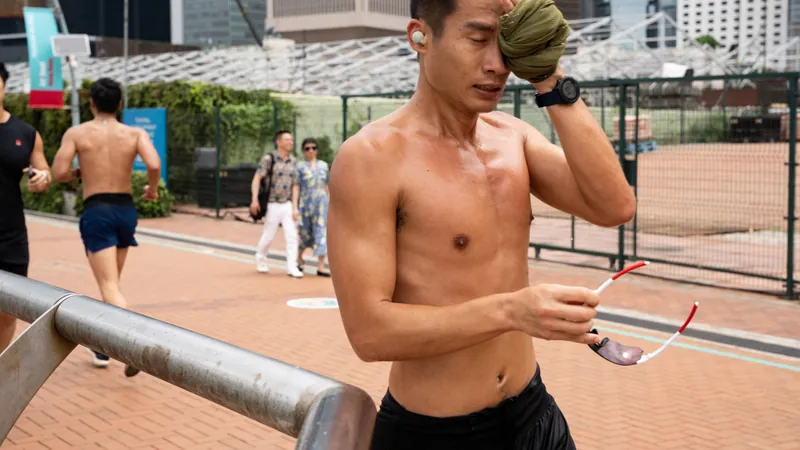
Heat Stroke: Symptoms, First Aid and Prevention in Indian Summers
Confusion in the heat is an emergency. The symptoms, NCDC's first-aid steps, why you cool before you transport, and who's most at risk.
Read more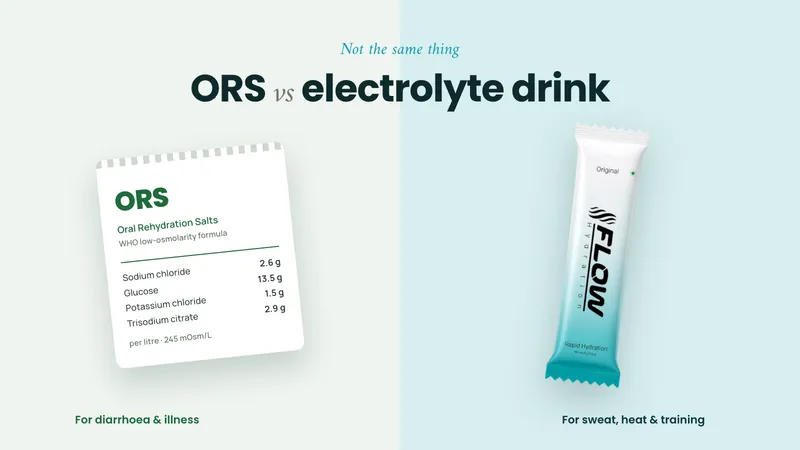
12 October 2026 · 8 min read
ORS vs Electrolyte Drinks: What's the Difference (and What FSSAI Changed)
ORS isn't banned, but sugary drinks can no longer use its name. The WHO formula, what FSSAI changed, and when to choose ORS over an electrolyte drink.
Read more
12 October 2026 · 9 min read
Electrolyte Powder: Benefits, Uses and Who Actually Needs It
What each electrolyte does, the benefits the research supports, who needs a sachet and who doesn't, and how to read a label in India.
Read more