
Key takeaways
- 500 ml water + ¼ tsp salt (~590 mg sodium) + 2 tsp sugar + ½ lemon makes a sound sweat-replacement drink.
- A small amount of sugar helps absorption; too much slows it.
- Nimbu pani, salted chaas and salted coconut water are good Indian variations.
- For diarrhoea or vomiting, especially in children, use packet WHO-formula ORS, not a home mix.
"Electrolyte water at home" and "electrolyte drink at home" are some of the most searched electrolyte queries in India, and nimbu pani with a pinch of salt is what most of our grandparents would have suggested anyway. You can make a perfectly good sweat-replacement drink in your kitchen. Here's a recipe with the maths shown, and the one situation where you shouldn't use it.
Homemade electrolyte drink recipe (500 ml)
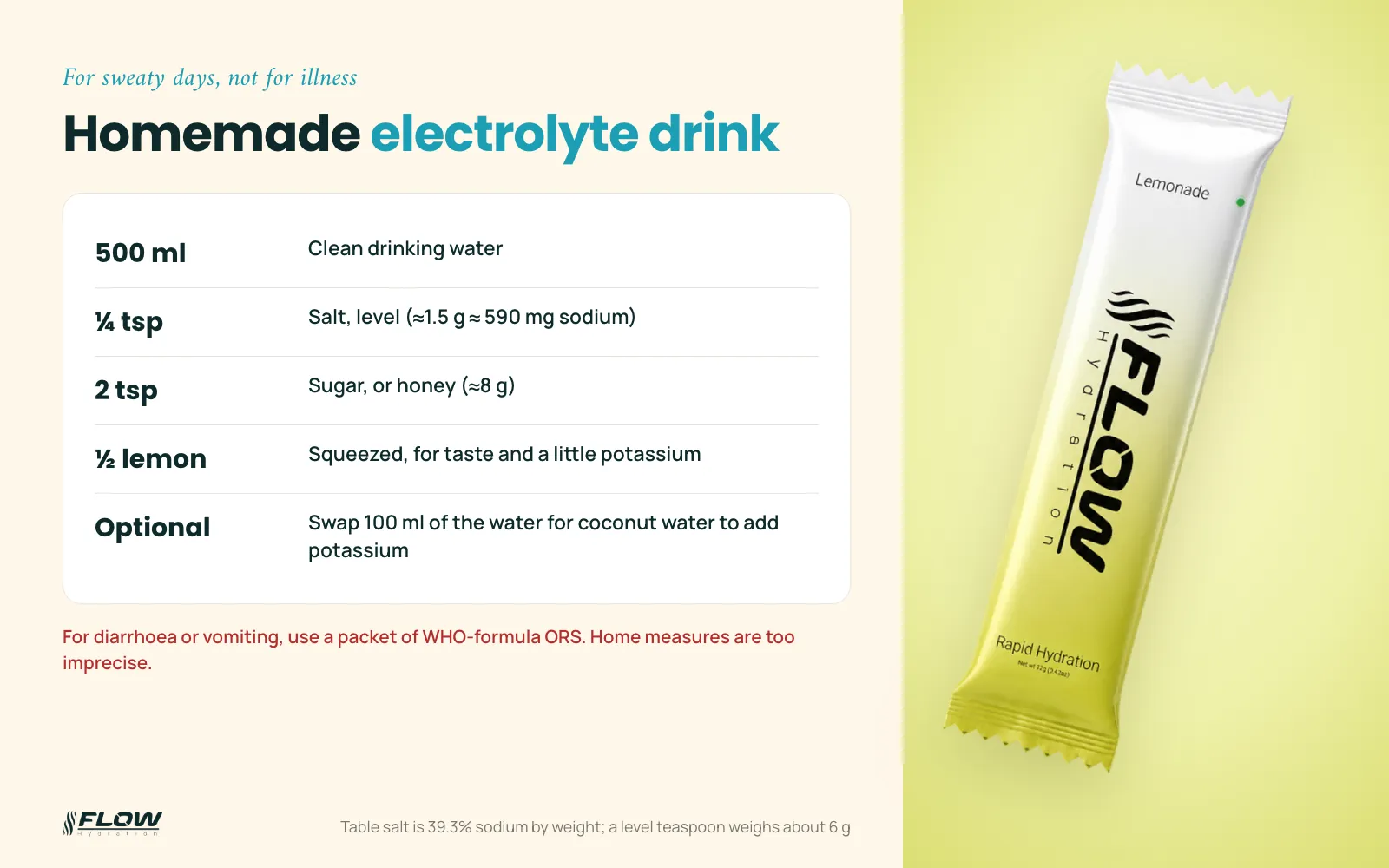
- 500 ml clean drinking water
- ¼ level teaspoon salt (about 1.5 g, which is about 590 mg sodium)
- 2 level teaspoons sugar or honey (about 8 g)
- ½ lemon, squeezed, for taste and a little potassium
- Optional: swap 100 ml of the water for coconut water to add potassium
Stir until the salt and sugar dissolve. Taste it: it should be faintly salty, like tears, not like sea water. Drink within the day.
The maths behind it
Sodium
Table salt is sodium chloride, and 39.3% of it by weight is sodium. A level teaspoon of fine salt weighs about 6 g, so ¼ teaspoon is about 1.5 g of salt, or roughly 590 mg of sodium. That's in the range athletes lose per litre of sweat: about 825 mg on average, from roughly 420 to 1,630 mg.2
Sugar
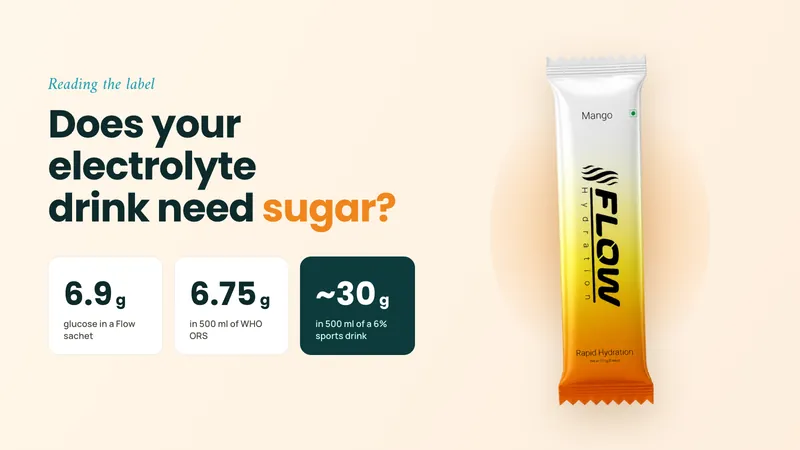
About 8 g of sugar in 500 ml gives a 1.6% solution, similar to WHO ORS (6.75 g of glucose per 500 ml).1 A small amount helps sodium and water absorb through the SGLT1 transporter, while too much slows water absorption.3 Table sugar is sucrose, half glucose, so it's a little less efficient than the pure glucose in ORS, but fine for sport.
Potassium
Lemon juice adds a little. 100 ml of coconut water adds about 165–250 mg.5
Indian variations
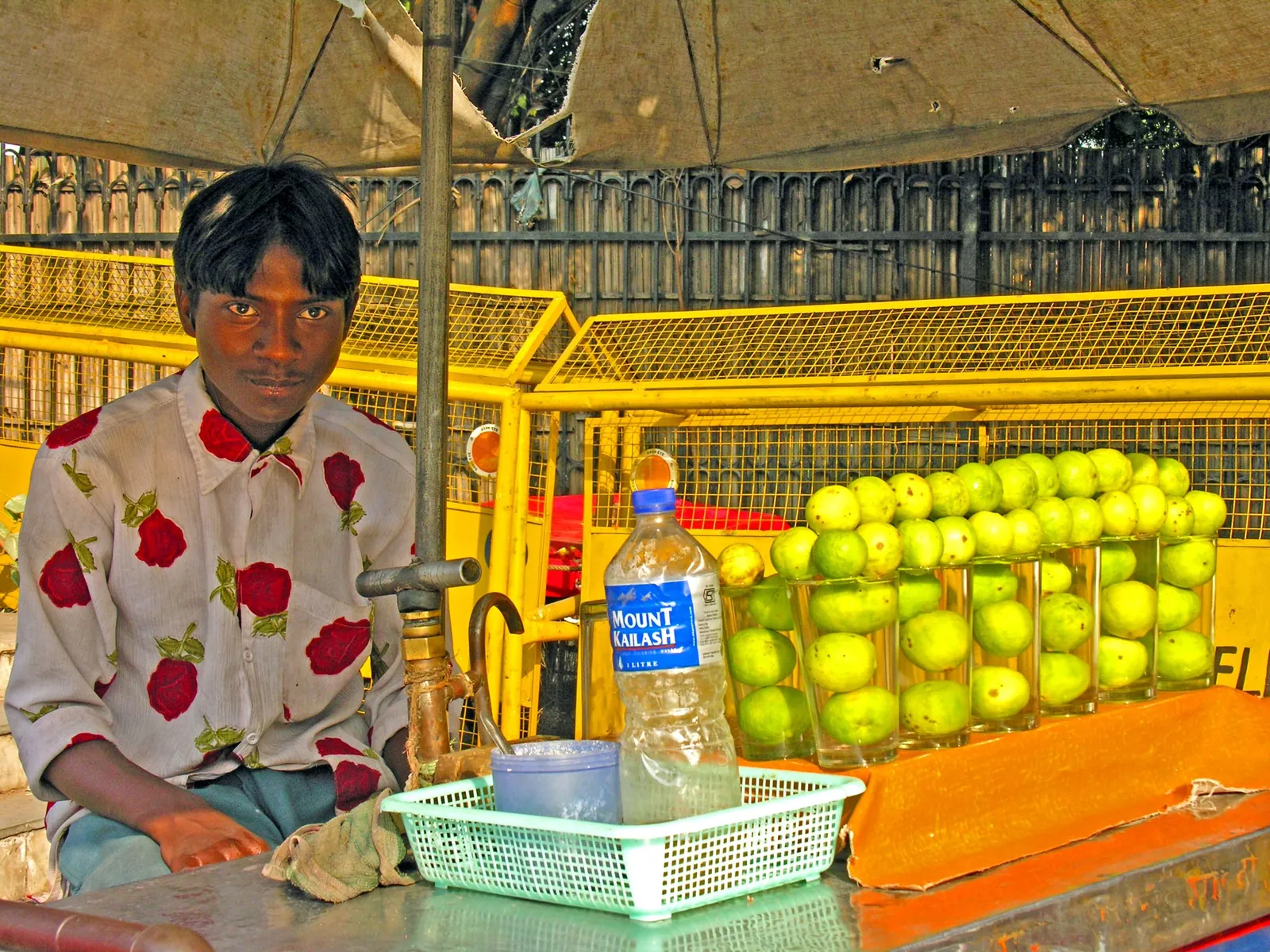
- Nimbu pani / shikanji: the recipe above, often with roasted jeera. Kala namak (black salt) works in place of table salt; it's also mostly sodium chloride.
- Chaas (buttermilk) with salt: adds sodium, potassium and some protein. ICMR lists buttermilk among recommended drinks.4
- Salted coconut water: a pinch of salt in a tender coconut balances its high potassium with sodium.
When not to use a homemade drink
For diarrhoea, vomiting or dehydration from illness, especially in children, use packet WHO-formula ORS. ORS has a precise balance of sodium, glucose, potassium and citrate. Kitchen teaspoons vary too much: too much salt or sugar can make diarrhoea worse and be dangerous for a small child.1 Published "home ORS" recipes also disagree with each other, which is exactly why the packet is safer. See ORS vs electrolyte drinks.
Homemade vs a sachet
Homemade wins on: cost, simplicity and control over ingredients.
A sachet wins on: an exact dose every time, magnesium and calcium as well as sodium and potassium, portability on a long run or a trek, and taste you'll actually drink at the 30 km mark.
A Flow sachet carries 1000 mg sodium, 200 mg potassium, 60 mg magnesium, calcium and chloride, with 6.9 g glucose in 500 ml. That's more sodium than the homemade version, designed for long, sweaty efforts. For a regular sweaty day, the kitchen recipe does the job.
How much to drink
Sip it during long or hot activity and afterwards. After heavy sweating, drinking about 1.25–1.5 litres for every kg lost, with sodium, restores fluid balance far better than water alone.6 If you're not sweating much, remember ICMR's cap of 5 g of salt a day from all sources.4
Frequently asked questions
How do I make electrolyte water at home?
Is nimbu pani an electrolyte drink?
Can I make ORS at home?
How much salt should I put in electrolyte water?
References
- 1.World Health Organization & UNICEF. Oral rehydration salts: production of the new ORS. WHO/FCH/CAH/06.1. Geneva: WHO; 2006. www.who.int/publications/i/item/WHO-FCH-CAH-06.1
- 2.Baker LB, Barnes KA, Anderson ML, Passe DH, Stofan JR. Normative data for regional sweat sodium concentration and whole-body sweating rate in athletes. J Sports Sci. 2016;34(4):358–368. doi.org/10.1080/02640414.2015.1055291
- 3.Shi X, Passe DH. Water and solute absorption from carbohydrate-electrolyte solutions in the human proximal small intestine: a review and statistical analysis. Int J Sport Nutr Exerc Metab. 2010;20(5):427–442. doi.org/10.1123/ijsnem.20.5.427
- 4.ICMR–National Institute of Nutrition. Dietary Guidelines for Indians, 2024 (Guideline 11: Restrict salt intake; Guideline 14: Drink adequate quantity of water). www.nin.res.in/dietaryguidelines/
- 5.U.S. Department of Agriculture, FoodData Central. Nuts, coconut water (liquid from coconuts), FDC ID 170174; Beverages, coconut water, ready-to-drink, unsweetened, FDC ID 174831. fdc.nal.usda.gov/
- 6.Shirreffs SM, Taylor AJ, Leiper JB, Maughan RJ. Post-exercise rehydration in man: effects of volume consumed and drink sodium content. Med Sci Sports Exerc. 1996;28(10):1260–1271. doi.org/10.1097/00005768-199610000-00009
Kavya · Flow Hydration team
Writes about everyday hydration: water, coconut water, nimbu pani and what Indian dietary guidelines actually recommend.
First published 12 October 2026. This article is general information, not medical advice. If you have a medical condition, talk to your doctor.
Keep reading
12 October 2026 · 7 min read
Sugar-Free Electrolyte Powder: Do Electrolyte Drinks Need Sugar?
A little glucose helps absorb sodium and water; a lot is a soft drink. How to choose between sugar-free and low-sugar electrolytes.
Read more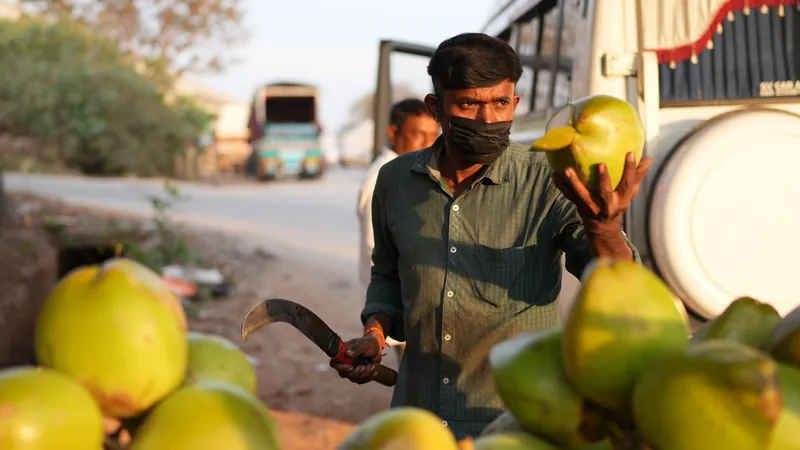
12 October 2026 · 7 min read
Coconut Water vs Electrolyte Drinks: Which Hydrates Better?
Two trials found coconut water rehydrates about as well as a sports drink after moderate exercise. Why sodium still matters for long, sweaty efforts.
Read more
12 October 2026 · 9 min read
Electrolyte Powder: Benefits, Uses and Who Actually Needs It
What each electrolyte does, the benefits the research supports, who needs a sachet and who doesn't, and how to read a label in India.
Read more